The Most Common Reasons Dentists Recommend Dental Crowns
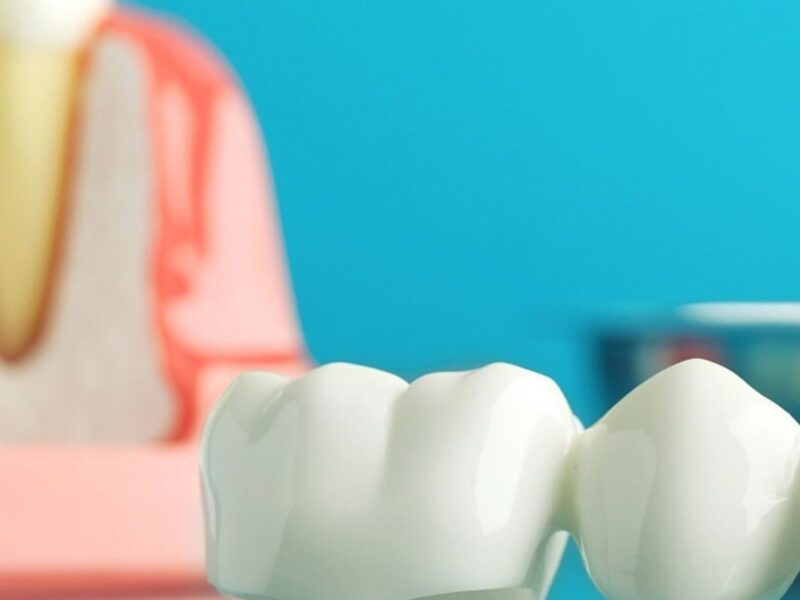
Few restorative treatments in dentistry are as widely recommended, and as widely misunderstood, as dental crowns. Many patients hear the word "crown" and immediately assume something has gone badly wrong, or that the tooth is beyond saving. In practice, a crown is often the treatment that saves a tooth from becoming a much larger problem.
Dentists recommend crowns for a fairly short list of practical reasons. The tooth may be cracked, heavily filled, weakened after root canal treatment, badly worn down, misshapen, or so broken that a simple filling will not hold up. The common thread is structure. When a tooth no longer has enough strength or shape to function predictably, a crown can restore what is missing and protect what remains.
That sounds straightforward, but the decision is rarely made on one factor alone. Dentists weigh how much healthy tooth is left, where the tooth sits in the mouth, how hard the patient bites, whether they grind their teeth, how visible the tooth is when smiling, and how long a smaller repair is likely to last. A front tooth with a chipped edge and a back molar with a fractured cusp may both need treatment, yet the best treatment may be very different.
Understanding why crowns are recommended helps patients make better decisions and ask sharper questions. It also helps take some of the fear out of the conversation. A crown is not a sign of failure. More often, it is a strategic repair chosen because the tooth still has value and a reasonable future.
What a dental crown actually does
A dental crown is a custom-made covering that fits over a prepared tooth. It restores the tooth's shape, strength, and function, and in many cases improves appearance as well. Unlike a filling, which replaces a portion of the tooth, a crown protects the entire visible part above the gumline.
That full coverage matters when the remaining tooth is vulnerable. Think of a molar that has lost half its chewing surface to decay and an old filling. The issue is not just the hole. The remaining walls of the tooth become thinner and more likely to flex or fracture under pressure. Chewing forces on back teeth are significant, often several times higher than patients expect, especially if they clench or grind. A filling can seal the area, but it cannot always reinforce a tooth that has already become structurally compromised. A crown can.
Modern crowns come in several materials, including ceramic, zirconia, porcelain-fused-to-metal, and gold alloys. Each has strengths and trade-offs. The best choice depends on the tooth, the bite, cosmetic priorities, and the amount of room available. The recommendation to place a crown is usually less about the material itself and more about the need for full-coverage protection.
When a tooth is too damaged for a filling
This is the most common reason dentists recommend Dental Crowns. The tooth has simply lost too much structure for a direct filling to be a durable answer.
Decay is one cause. Large cavities do not just create holes, they undermine surrounding enamel and dentin. Once decay is removed, the resulting tooth can look deceptively intact from the outside while being hollowed and fragile inside. Old dental work is another cause. It is not unusual to see molars with fillings placed, replaced, enlarged, then patched again over ten or fifteen years. Eventually there is more restorative material than natural tooth.
At that stage, the conversation changes from patching to protecting. A large filling may be quicker and initially less expensive, but it can act like a wedge inside a weakened tooth. If the remaining cusps are thin, they can fracture during normal chewing. I have seen patients come in with a tooth that had "just a big filling" placed elsewhere a year or two earlier, only to find one side of the tooth snapped off on a piece of bread crust or a handful of nuts. Nothing dramatic, just a tooth that reached its limit.
Dentists are not always recommending a crown because a filling is impossible. Often, a filling is possible, but poor risk management. The question is not whether a repair can be done today. It is whether that repair is likely to survive the next few years of real-life use.
Cracked teeth and fractured cusps
Cracks are another major reason for crowns, particularly in back teeth. A crack can begin as a microscopic line in enamel and progress into something much more serious. Sometimes patients feel a sharp pain when biting down or when releasing pressure. Sometimes there is no pain at all, only a visible fracture line or a broken-off cusp.
Not every crack requires a crown. Superficial craze lines on front teeth are common and often harmless. The problem is that deeper cracks in chewing teeth behave differently. Molars and premolars endure repetitive force. Each bite can make a cracked segment flex. That movement irritates the nerve and risks the crack extending deeper.
A crown helps by splinting the tooth together. It reduces flexing and spreads force more evenly. If the crack is caught early enough, a crown may prevent the tooth from splitting beyond repair. Timing matters here. Once a vertical crack travels too far into the root, the tooth may no longer be salvageable. That is why dentists tend to be more proactive with suspicious cracked teeth than patients expect.
One of the harder conversations in practice involves a tooth that hurts only "once in a while." Patients understandably wonder why a full crown is being suggested when the pain is intermittent. The answer is that cracked teeth do not always follow a neat progression. They can sit quietly for months, then suddenly worsen. Dentists have seen enough of these cases to know that waiting for obvious constant pain can close off better treatment options.
After root canal treatment
Teeth that have had root canal treatment are frequently crowned, especially back teeth. This recommendation has less to do with the root canal itself and more to do with what the tooth has been through before and during treatment.
A tooth usually needs root canal therapy because decay, trauma, repeated dental work, or a crack has already compromised it. Then, during the procedure, an opening must be made through the top of the tooth to access the canals. By the time the treatment is finished, the tooth may be clean and free of infection, but it is often structurally weaker than it was.
Posterior teeth, especially molars, are at highest risk. They absorb heavy chewing loads, and a root canal-treated molar with large missing portions of tooth can fracture if left with only a filling. Front teeth are different. If an anterior tooth has good structure remaining and does not bear the same force, a crown may not always be necessary. Sometimes a bonded restoration is enough. This is one area where the recommendation should be individualized rather than automatic.
Patients sometimes hear that root canal-treated teeth become "dead" or brittle. That phrasing is too simplistic. The bigger issue is not that the tooth somehow dries out, but that it has often lost substantial structural support. A crown restores that support and lowers the risk of catastrophic fracture.
Teeth with large existing fillings
Many crowns are recommended not because something new happened this week, but because a tooth has reached the end of what repeated patchwork can reasonably achieve.
Large fillings age. Materials wear, margins leak, teeth flex, and the bond between restoration and enamel can degrade over time. A filling that looked sound ten years ago may now show staining, marginal breakdown, recurrent decay, or tiny fractures around the edges. Replacing it with another filling may buy time, but each replacement often requires removing a bit more tooth.
This is where judgment matters. There is no magic percentage of tooth loss that automatically means crown. Some teeth with very large restorations remain stable for years. Others fracture unexpectedly because the pattern of remaining tooth structure is poor. Dentists look at which cusps are unsupported, how deep the old restoration extends, whether cracks are visible, and how the upper and lower teeth contact when the patient bites.
For patients, the recommendation can feel abrupt. The tooth may not hurt, and the filling may have "worked fine." But dentistry is full of decisions made before pain starts. A crown is often proposed because the current restoration is still surviving, yet no longer has much margin for error.
Severe wear from grinding, clenching, or acid erosion
Crowns are also used to rebuild teeth that have been worn down. The pattern may come from bruxism, which includes grinding and clenching, from acid erosion linked to reflux or dietary habits, or from a combination of both. In many adults, these patterns develop gradually enough that they go unnoticed until sensitivity, chipping, or shortened teeth become obvious.
When wear is mild, dentists usually prefer conservative options such as night guards, bonding, bite adjustment in selected cases, or monitoring. Crowns enter the picture when the tooth structure has been reduced so much that function and durability are compromised.
A patient with advanced wear often presents with several signs at once: flattened chewing surfaces, small chips, exposed dentin, sensitivity to temperature, and changes in bite. Front teeth may look shorter or more translucent at the edges. Back teeth may lose their anatomy and become harder to chew with efficiently. In those cases, crowns can rebuild height, restore shape, and protect what remains.
This is not a casual decision. Full-mouth rehabilitation with multiple crowns is a substantial undertaking. It requires careful planning, attention to bite relationships, and a realistic discussion about maintenance. If the underlying grinding habit is not addressed, even excellent crowns can chip or fail. That is why a night guard is often part of the long-term plan, not an optional extra.
To support a badly broken tooth
Sometimes the reason is simple and visible. Part of the tooth has broken off.
If the break is small and the remaining tooth is strong, bonding or a filling may be enough. If the fracture is larger, especially when a cusp is missing or the tooth broke near an old filling, a crown is often the more reliable repair. The goal is not only to replace what broke away but to reduce the chance of another section failing soon after.
This comes up often with teeth that fracture after chewing something unexpectedly hard, such as popcorn kernels, ice, nut shells, or olive pits. It also happens when an old filling leaves thin walls around it for years. A patient may bring in the broken piece and hope it can simply be glued back. Occasionally that is possible. More often, the fracture pattern leaves a tooth that needs full coverage to be serviceable again.
An important detail is whether the break extends below the gumline. Once a fracture drops too deep, restoring the tooth becomes more difficult. The tooth may need additional procedures, or it may not be restorable at all. Dentists recommending a crown in these cases are often trying to preserve a tooth that is still salvageable, but only just.
Cosmetic and shape-related reasons
Not every crown recommendation is driven by decay or fracture. Crowns can also be used to improve teeth that are severely discolored, misshapen, undersized, or affected by developmental defects. This is more selective than patients sometimes realize.
For cosmetic concerns alone, many dentists prefer more conservative options first. Whitening, enamel reshaping, bonding, or veneers can often improve appearance while preserving more natural tooth. A crown requires greater reduction of the tooth and is usually chosen when appearance and structural issues overlap, or when less invasive options are unlikely to last.
A tooth with deep internal discoloration after trauma is a good example. If bleaching will not predictably change the shade, and if the tooth already has a large filling or prior root canal treatment, a crown may make sense both cosmetically and structurally. Another example is a malformed tooth that affects bite and appearance at the same time. In those situations, the crown solves more than one problem.
The best cosmetic dentistry is usually the least invasive treatment that can reliably meet the goal. A dentist who recommends a crown for cosmetic reasons should be able to explain why a simpler treatment would fall short.
Crowns on dental implants and bridge abutments
The word crown also comes up when replacing missing teeth. An implant is typically restored with a crown, and teeth that support a bridge often need crowns as well. In those cases, the purpose is a little different. The crown is not only protecting a damaged natural tooth, it is also acting as the functional replacement tooth or as part of a larger prosthetic design.
For implant crowns, the recommendation is straightforward because the crown is the visible chewing part attached to the implant fixture. For bridges, neighboring teeth may need crowns because they are serving as anchors. This is one reason a missing tooth can lead to discussion about crowns even when the adjacent teeth seem healthy. Whether that is the best option depends on the condition of those teeth, the state of the surrounding bone and gums, and whether an implant is feasible.
When a crown is not the first choice
Patients benefit from knowing that crowns are useful, but not universal. A careful dentist does not reach for full coverage by default.
Small to moderate cavities can often be treated beautifully with fillings. Localized cosmetic flaws may respond better to bonding or veneers. Some posterior teeth can be restored with onlays or partial crowns, which preserve more natural structure while still reinforcing weakened areas. A cracked tooth may sometimes need root canal treatment first, depending on symptoms and nerve involvement. And occasionally the tooth is too damaged for even a crown to succeed, making extraction the more honest recommendation.
A sensible treatment discussion usually compares the likely lifespan and limitations of each option. For example, a large filling may cost less now but carry a higher risk of future fracture. A crown may offer better long-term protection but requires more tooth preparation and greater upfront cost. Neither point should be hidden. Good treatment planning is not about selling the biggest procedure. It is about matching the repair to the risk.
What dentists assess before recommending one
When evaluating whether a crown is appropriate, dentists usually look at several practical variables at once:
- How much healthy tooth structure remains after decay or old material is removed
- Whether cracks, fractures, or unsupported cusps are present
- The position of the tooth in the mouth and the forces it must handle
- The condition of the nerve, root, and surrounding gum and bone
- The patient's habits, including clenching, grinding, diet, and oral hygiene
These factors explain why two teeth that look similar in a mirror may receive very different recommendations. One may be a good candidate for a bonded filling. The other may be one hard bite away from splitting.
Questions worth asking if a crown is recommended
Patients do not need to accept or reject a crown blindly. The most productive conversations usually focus on what problem the crown is meant to solve and what the realistic alternatives are. A few questions often clarify the picture quickly.
Ask what would likely happen if the tooth were restored with a filling instead. Ask whether the concern is current fracture, future fracture, decay risk, bite force, or appearance. Ask how much natural tooth remains and whether a more conservative option such as an onlay could work. It is also reasonable to ask about material choices, expected longevity, and what habits could shorten the life of the restoration.
In day-to-day practice, the strongest recommendations are usually the easiest to explain. When a molar has lost half its structure, has crack lines, and hurts on biting, the reasoning is concrete. When the case is more borderline, the dentist should say so. Dentistry is not always absolute, and patients appreciate honesty about gray areas.
The value of timing
One of the least appreciated aspects of crowns is timing. A crown placed before a tooth fractures badly can be preventive. The same crown proposed after a major split may no longer be enough. That difference affects cost, complexity, and the chance of keeping the tooth at all.
People often delay because the tooth is not hurting much, or because the old filling has been there for years without incident. Unfortunately, structural problems do not always announce themselves with pain. Teeth can break suddenly, and not always at convenient times. A cracked cusp on a Tuesday can become an emergency by Saturday dinner.
That does not mean every recommendation is urgent. It does mean that "it feels fine" is not a reliable measure of structural soundness. Dentists recommend crowns so often because they have seen what happens when weakened teeth are asked to do another year of work without enough support.
Why crowns remain such a common recommendation
Crowns sit at simpledentalca.com Dental Crowns the intersection of repair and prevention. They restore damage that already exists, and they reduce the odds of more serious damage later. That is why they remain one of the most common recommendations in restorative dentistry.
The reasons are usually practical rather than dramatic. A tooth has become too weak for a filling. A crack needs to be stabilized. A root canal-treated molar needs protection. A heavily worn tooth must be rebuilt to function properly. A broken or misshapen tooth needs durable coverage. These are ordinary dental problems, but they require thoughtful solutions.
When a crown is recommended, the key question is not whether crowns are "good" or "bad." It is whether full coverage is the most predictable way to keep that specific tooth healthy, functional, and serviceable. In many cases, it is. And when the recommendation is made for the right reason, at the right time, a crown can add many years to the life of a tooth that might otherwise have been lost.
Simple Dental South Gate
Address: 8617 California Ave, South Gate, CA 90280
Phone number: +13236896118
FAQ About Dental Crowns
How much do crowns cost per tooth?
In the United States, a single dental crown typically costs between $800 and $2,500 per tooth without insurance. The ultimate out-of-pocket price depends heavily on the crown material, the location of the tooth, and whether you have dental insurance coverage.
What is the downside of crowns on teeth?
The primary downside of a dental crown is that the procedure permanently removes natural tooth enamel to shape the tooth for the cap.
Why do dentists push for crowns?
Dentists recommend crowns because a large filling cannot provide enough strength when a tooth loses a major portion of its structure or faces heavy chewing pressure.